
On 11 August 2026, Supply Chain Coordination Limited, which operates as NHS Supply Chain, published a tender notice on the UK government's Find a Tender service for a new Medical Simulation and Technologies Framework (notice 2026/S 000-076079). The framework is split into five lots: Human Patient Simulators; Task Trainers; Surgical and Procedural Trainers; Immersive Technology / Virtual Clinical environments and Recording; and Performance Recording Systems & Software. Tenders are due by 3pm on 28 September 2026, and the framework is expected to start in May 2027.
For anyone who sells simulation into hospitals and universities, the structure matters more than the headline. The notice lets a tenderer bid for one lot or several, and it does not score them the same way. Lots 1 and 2, full-body manikins and task trainers, give 55% of the weighting to service delivery and supplier capability. Lot 4, which covers VR/XR/MR technologies and virtual environments, gives that criterion 30% and adds one the manikin and task-trainer lots (Lots 1 and 2) do not have: Implementation and Adoption, at 20%. We read that as the buyer asking a direct question of every immersive product it considers: will it actually be used?
Beside the equipment, not instead of it
It is the same question we put first to a distributor who already carries manikins and task trainers and is looking at VARGATES Medical: does a virtual-patient simulator compete with the equipment in your catalogue, or sit beside it? The framework answers it the way we do. The buyer treats the two as different purchases, in different lines of the same specification.
The lot descriptions are worth reading closely, because they overlap. Lot 1 says full-body manikins are used to train “clinical assessment, decision making, and multidisciplinary team responses”. Lot 2 is about “repetitive skill development” in specific clinical skills such as cannulation, suturing and airway management. Lot 4 covers solutions “that deliver scenario based training” and support “team training, decision making, and debriefing”. Decision making appears on both sides of the line. What differs is what the learner works with: a physical body in a room, or a virtual patient in a virtual environment.
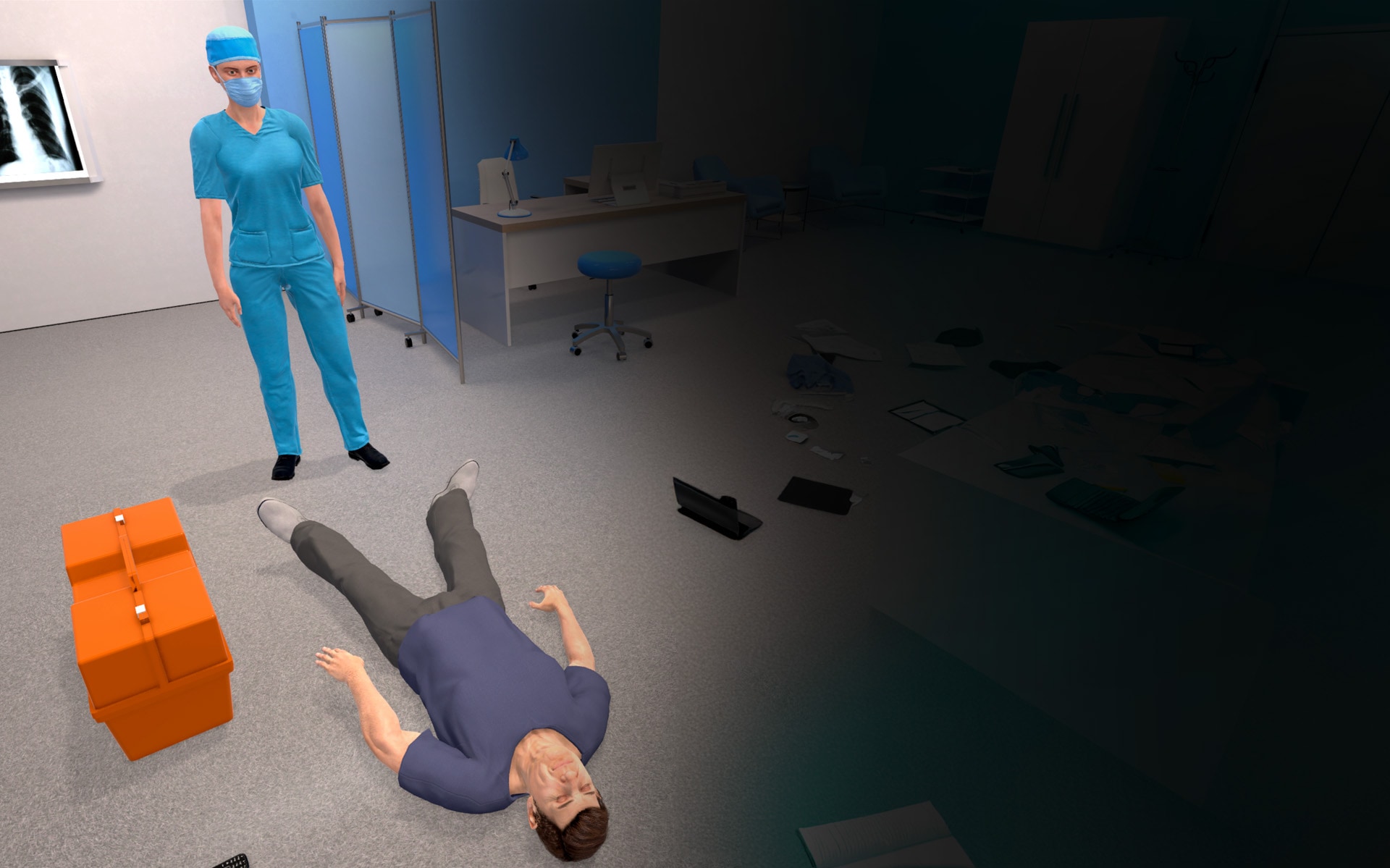
A virtual clinical scenario in VARGATES Medical. © Vardix Group — VARGATES Medical
Where VARGATES Medical fits
VARGATES Medical is a clinical VR simulation suite for medical universities and hospitals. It offers realistic 3D models of organs, pathologies and surgical procedures, and full VR/AR/MR support in which students interact with virtual patients, instruments and anatomy in real time. Collaborative case studies put several students and instructors in the same virtual space, from any device and any location. The platform runs on standard VR headsets or in a web browser, and ships with pre-built modules for anatomy, pathology, pharmacology and surgery.
That is the kind of product the virtual clinical environment line of a specification describes. It is not a substitute for a manikin or a task trainer, and we would rather say so before a pilot than after one. A department whose real gap is a manual skill, such as suturing, cannulation or intubation, needs equipment, and work in a headset or on a screen will not replace it. Where the requirement is scenario work and case rehearsal that students can repeat without waiting for a free simulation room and a set-up manikin, a virtual-patient simulator is the other half of the offer.
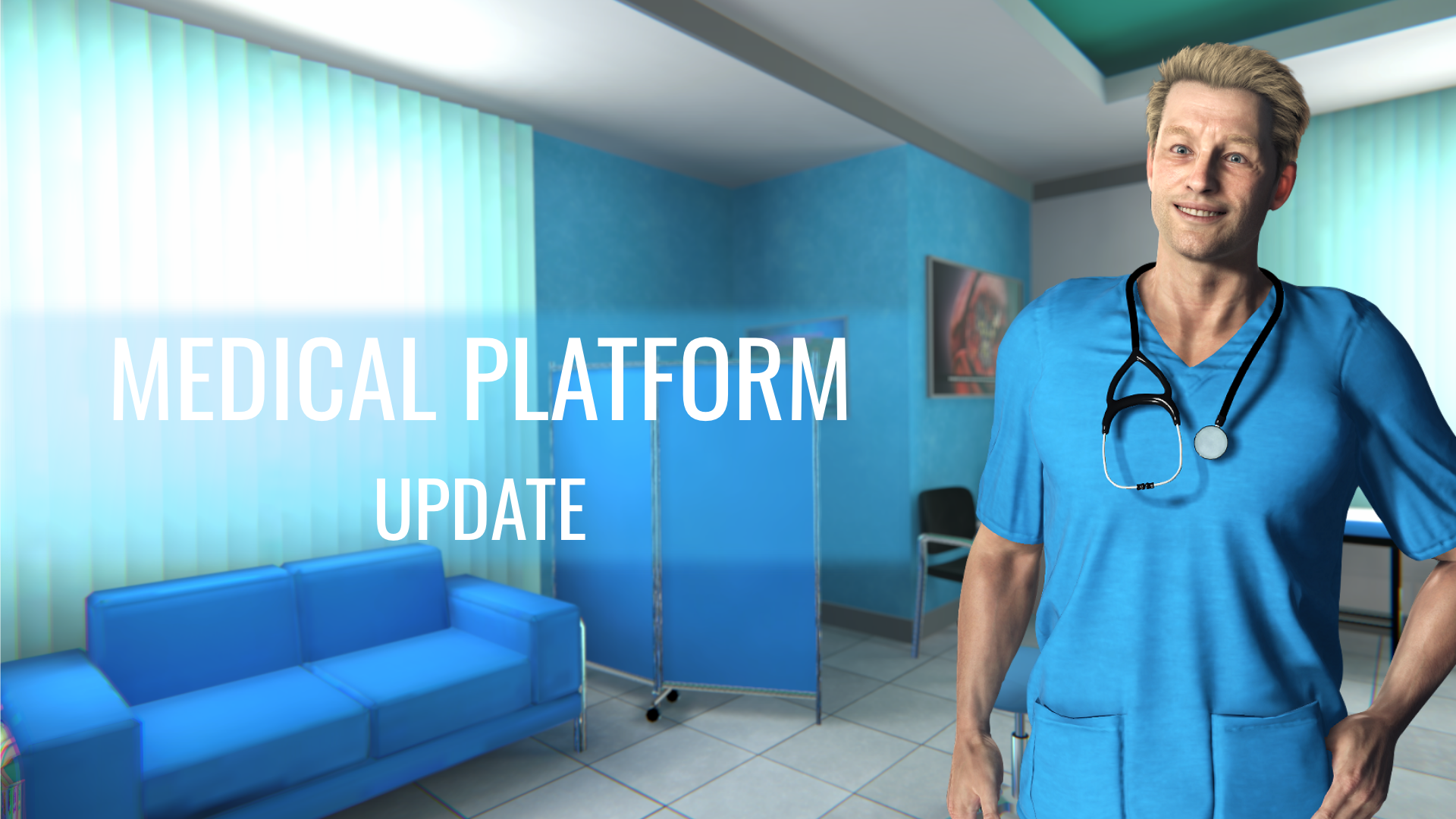
The virtual clinic of the VARGATES Medical platform. © Vardix Group — VARGATES Medical
Adoption is what gets scored
The adoption criterion is the part a distributor should take most seriously, because it is the one the manikin and task-trainer lots in this notice do not carry. A buyer asking whether a virtual product will be used is asking for evidence of use: who trained, on what, and what an instructor could see afterwards. VARGATES Medical tracks every session, score and error, gives instructors real-time dashboards on student progress, and integrates with the institution's learning management system, so training data flows into existing student record systems. Those are the things a teacher can grade and a department head can show, and they are the practical answer to a question a buyer has now written into its scoring.
What this means for a partner
The framework is a UK procurement, and this material is not a comment on who will win it. Its shape is useful well beyond the UK: when a large buyer writes a simulation specification, manikins, task trainers and virtual clinical environments appear as separate lines, and a supplier who can answer only some of them answers only part of the requirement. A distributor who already holds the equipment side and adds a virtual-patient simulator can offer both halves in one response, instead of leaving the second half to someone else.
For partners, VARDIX offers authorised dealer or reseller terms: price protection and MDF on the dealer track, margin support and pre-sales help on the reseller track, together with co-marketing. Onboarding and Level 1–3 support come from VARDIX. The platform is live at medical.vargates.com, and a partner demo starts from that classroom.
If you already sell simulation equipment to medical schools or hospitals, the practical test is simple. Ask the department what it currently cannot assess. If the answer is a technique, that is a hardware conversation. If the answer is how a student works through a case, it is ours.