
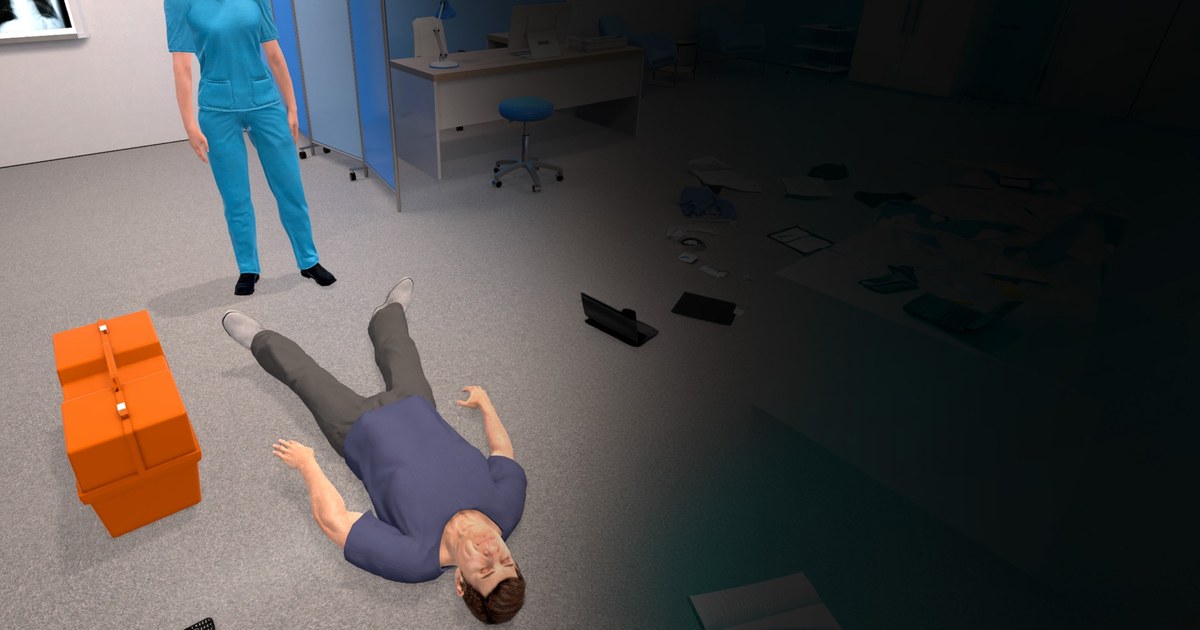
In a post on its newsroom on 19 October 2026, Austin Community College District announced that the Texas Higher Education Coordinating Board had awarded its nursing programme a two-year Nursing Innovation Grant, for an initiative it calls the NightShift+ Preceptor Academy. ACC is one of eight Texas colleges and universities funded in the 2026 round, and the grant period runs from 1 September 2026 to 31 August 2028. The announcement names the problem in its own words: “a longstanding challenge in nursing education: limited clinical capacity.”
Three of the plan’s five stated goals carry the substance. The college intends to create approximately 20 additional clinical placement opportunities over two years by opening evening and night shifts to students. It will train at least 20 experienced nurses to serve as night-shift clinical preceptors. And it will give participating students “specialized onboarding and simulation-based preparation before beginning their clinical experiences.” ACC says it is still in the planning stages, with nurses, faculty, students and employers involved in shaping the model.
Placements grow one shift at a time
We do not read twenty as a modest target. A placement needs a ward with patients, a shift a student may join and a nurse willing to supervise, and nearly every one of those belongs to a hospital rather than to the school. The third line of the plan, preparation before the ward, is the exception.
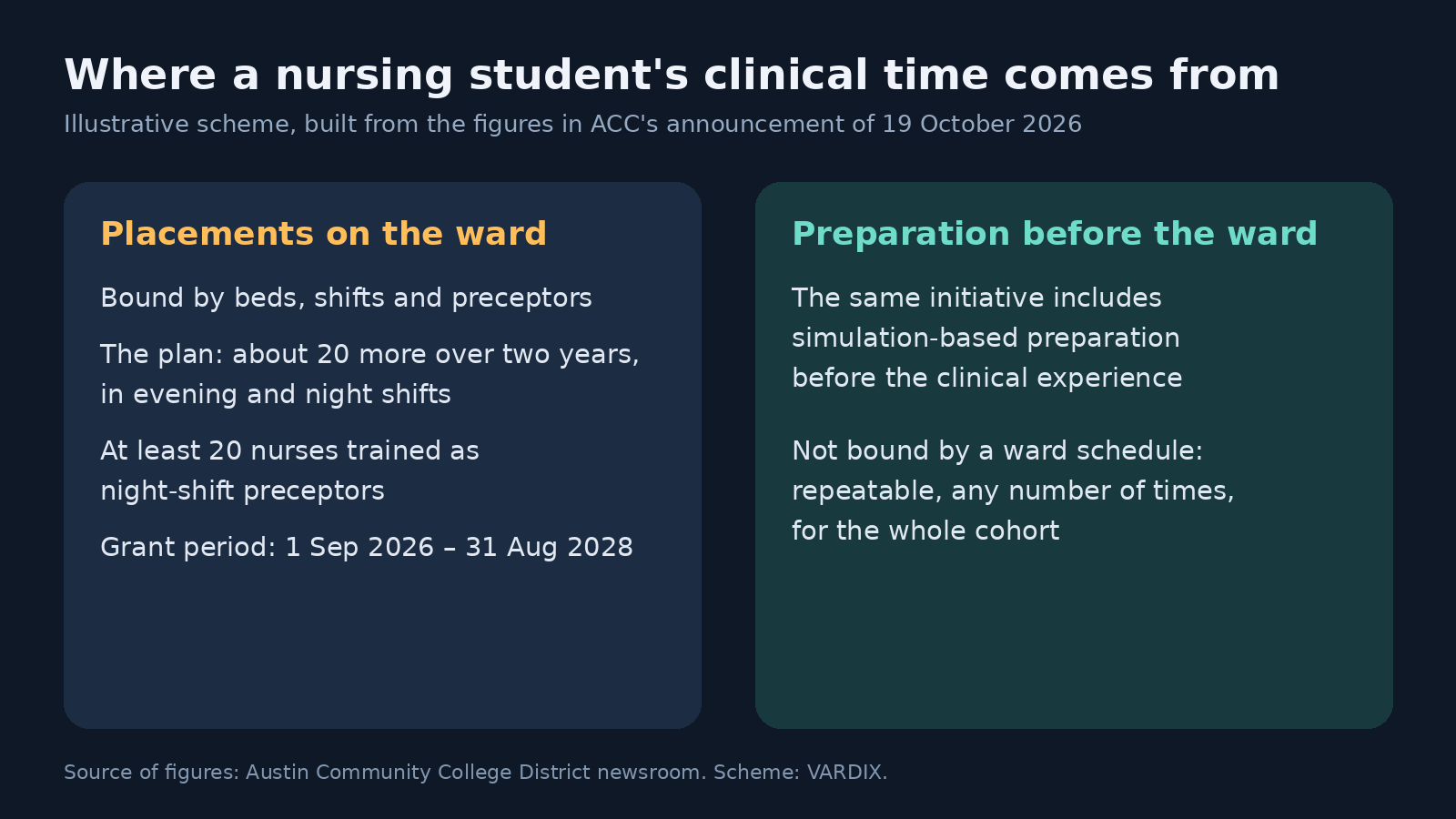
Illustrative scheme built from the figures in ACC’s announcement of 19 October 2026. It is our reading, not a diagram published by the college. © Vardix Group
What a student can bring to a night shift
VARGATES Medical is a simulation suite for medical universities, teaching hospitals and clinical-skills centres. Students work with virtual patients and clinical cases on a PC or an interactive panel, or in a VR headset; multi-user cases put several students and an instructor in the same virtual space; and each session, score and error is recorded so the instructor can see where a student is before they reach a real patient.
In our view this is where simulation belongs in a programme short of placements: a student who has already rehearsed an emergency on a virtual patient spends the preceptor’s scarce night hours on what only a ward can teach. A simulator does not create a placement, and ACC’s own plan does not treat simulation as one; it treats it as the step before.
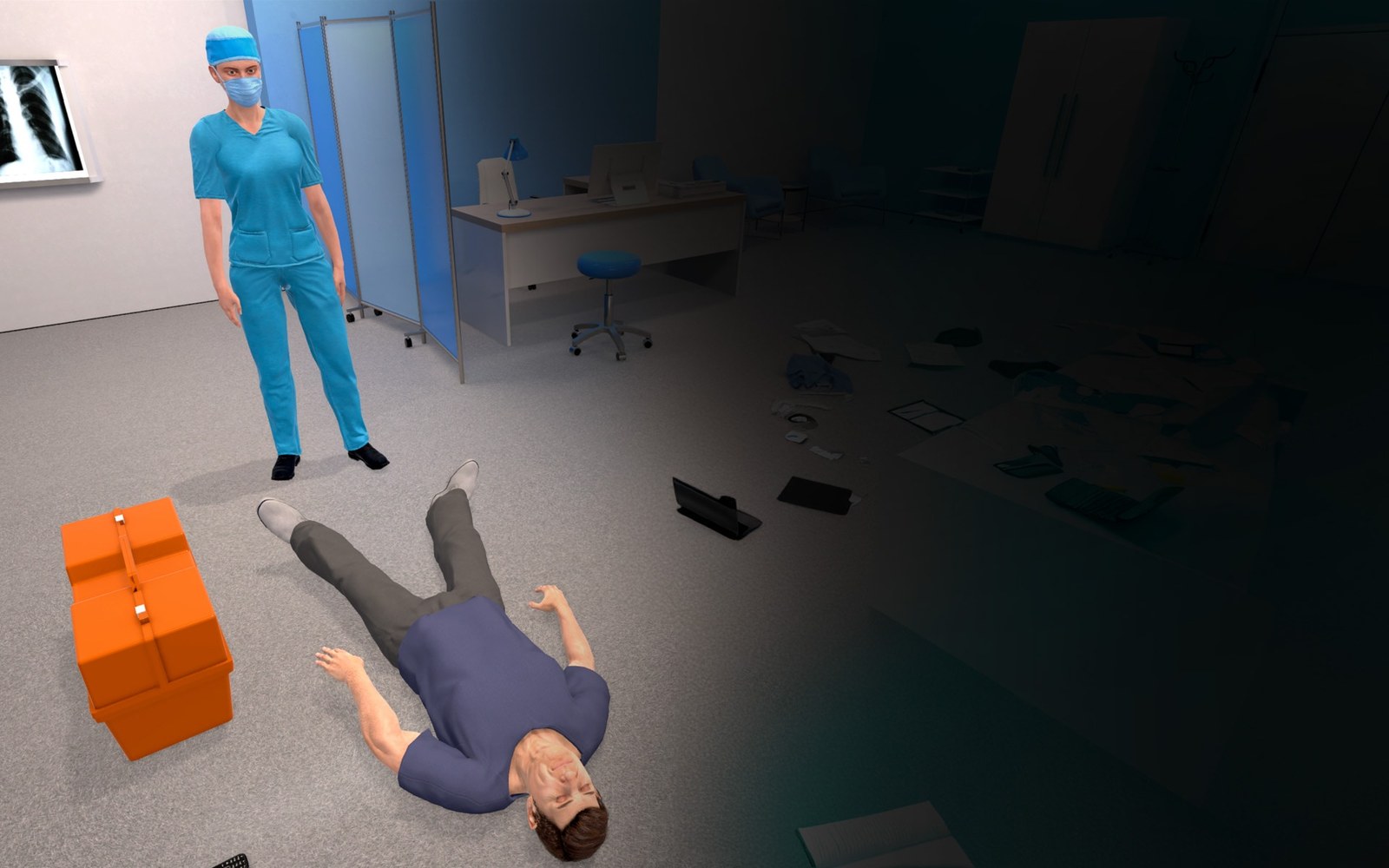
A clinical case in the VARGATES Medical virtual clinic. © Vardix Group — VARGATES Medical
Which schools are asking the same question
For a distributor, the conversation starts with programmes that recognise ACC’s problem as their own: cohorts that grow faster than the supervised shifts their partner hospitals can offer. The announcement does not name any simulation supplier, and nothing here suggests a relationship between VARDIX and ACC or the Coordinating Board. What a partner can offer such a school is narrow and defensible — not more placements, but students who arrive at the ones they get already rehearsed.