
On 17 September 2026 the journal Clinical and Experimental Dermatology published a randomised controlled trial titled “Gamification of dermatology diagnostics training: a nationwide, randomized, controlled trial of 34,556 cases”. Medical students were randomised to a gamification group or a control group, “both of which had access to a quiz-based dermatology diagnosis training platform”. In addition, the gamification group “received a daily leaderboard showing rank, based on points earned through training”.
The authors report that “Seventy-one participants were included; 34,556 assessments were completed”. The leaderboard group “trained 3.3 times as many cases as the control group”, and yet “There was no significant difference in diagnostic skill improvement”. Their conclusion: “Gamification led to substantially increased training volume, without improving skills acquisition”. They suggest this “may be explained by a shift in focus towards leaderboard placement, diminishing motivation to internalize learning content”.
Why it matters for medical schools
A school that judged this training by volume, by cases opened and points scored, would have picked the leaderboard group. On the measure the trial was built around, a validated 12-case diagnostic test before and after training, adding the leaderboard to that platform gave no statistically significant advantage. The trial is small, covers one specialty and tested one change to one platform, so its lesson is narrow, and still useful: a count of cases practised is not a measure of diagnostic skill.
An earlier study, published on 24 August 2026 in Advances in Simulation under the title “Virtual patients and learning communication skills at “double speed”: a qualitative study using the TPACK framework”, looked at virtual patients built for communication practice. Medical students interviewed about the platform “reported enhanced confidence through scaffolded exposure, but emphasised VP inferiority to real-world patient encounters”, and they “sought to speed through sections where possible”. They suggested using those virtual patients “as preparatory learning rather than communication skills practice”, recognising that “mastery requires repeated engagement with real or simulated patients”.
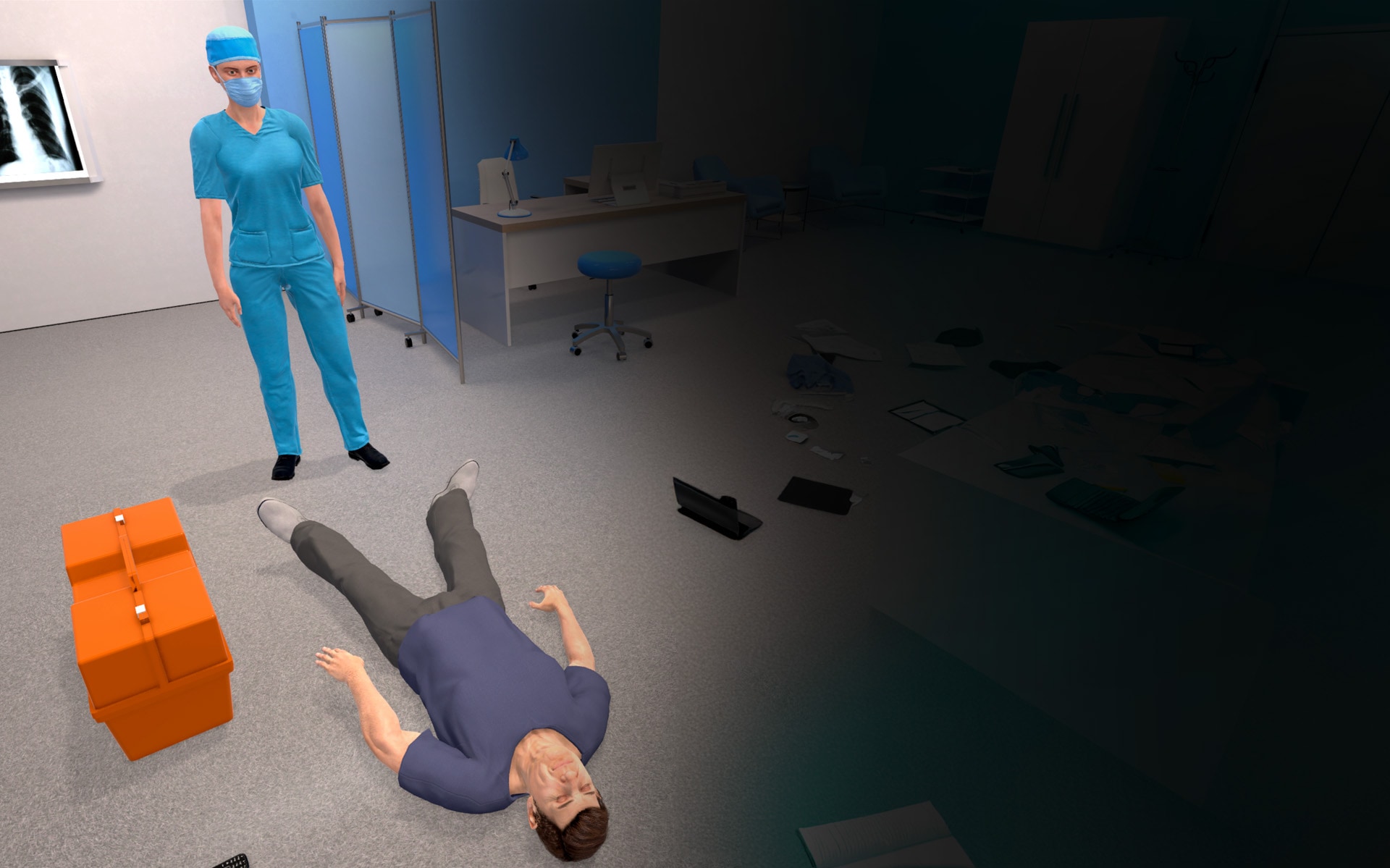
A frame from VARGATES Medical: a virtual clinic scene with a patient on the floor and a clinician beside him. © Vardix Group — DreamLight
Where clinical simulation fits
VARGATES Medical is the group’s clinical simulation platform for medical universities and hospitals. It combines 3D models of organs, pathologies and procedures with virtual patients that students work with in VR or in a web browser, so trainees practise in a risk-free environment before they touch a real patient. For instructors it tracks every session, score and error, with real-time dashboards on student progress, and it integrates with a university’s LMS.
Our reading of the two studies, not the authors’, is that this is the useful shape for digital clinical practice: judged on what a student does rather than how much, reviewed by an instructor, and used as preparation before students meet patients rather than instead of them.
What it does not do
Neither abstract names or reports an evaluation of VARGATES Medical, and these abstracts provide no evidence of its diagnostic effectiveness. We recommend using VARGATES Medical alongside supervised patient encounters, not as their replacement. The students in the August study asked for virtual patients as preparation alongside real or simulated encounters, and that is the place we would give any virtual-patient product, ours included. Whether a school’s students diagnose better is shown by that school’s own assessments, not by a dashboard.
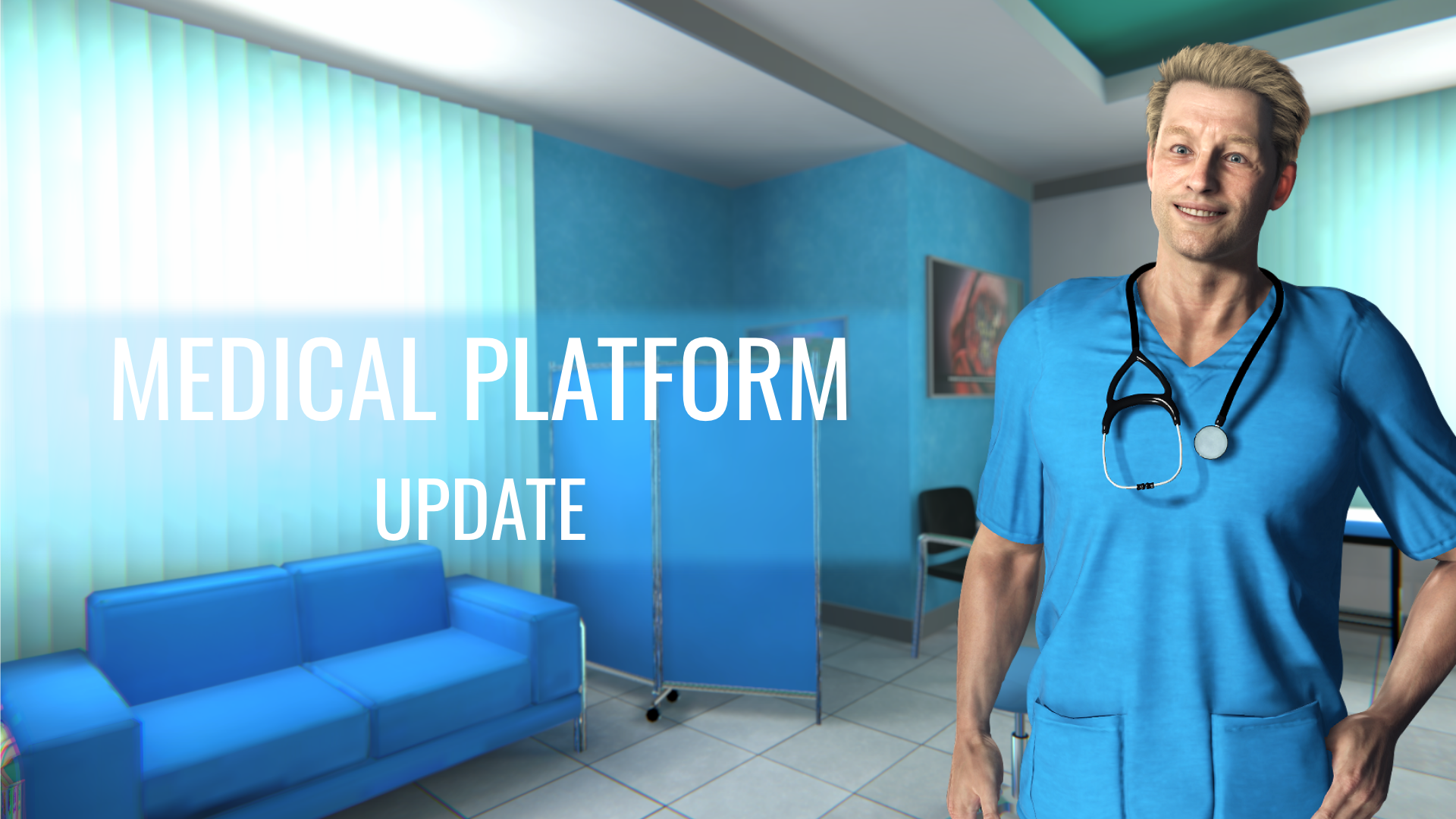
A frame from VARGATES Medical: the virtual clinic. © Vardix Group — DreamLight
For a partner in medical education
The buyers are medical universities and hospitals, and the natural partner is a distributor or integrator that already sells to their faculties. The partner holds the territory; VARDIX runs onboarding and the support chain.
The VARDIX partnership programme has reseller, integrator and technology-partner tiers, with sales training, demo licenses and a dedicated partner manager.