
On 10 September 2026 the Medicines and Healthcare products Regulatory Agency (MHRA) published National Commission into the Regulation of AI in Healthcare: Recommendations for a future regulatory framework. Recommendation 11 of the report concerns direct-to-consumer products — software and AI-enabled devices “which people can access directly, without involvement of a healthcare practitioner”. The Commission notes that the lack of a human professional as an intermediary changes what is expected of the maker: the device, its interface and its supporting materials must suit a general user, “without being able to rely on a health professional or health provider for any risk controls”.
What goes missing in that setting is the person who notices a wrong number. Laboratory medicine has already measured where software tends to go wrong when it reads reports. In a study in Clinical Chemistry, published online on 12 February 2026 and in the May 2026 issue, a team from the Department of Laboratory Medicine & Pathology at University of Washington Medicine tested large language models on extracting structured features from pathology and laboratory reports. Error rates were near 5% for simple cases and 10% for more complex ones. The errors were “most commonly due to mistakes between negative and indeterminate findings, suggesting overconfidence of the models in the presence of reduced information.” The typical failure was not a wild answer. It was a confident one, in exactly the place where the honest answer was “cannot tell”.
That is the problem Lonevi is built around. Lonevi is the group’s longevity platform for clinics and individuals: people upload lab results and connect wearables, and the platform tracks biomarkers over time and updates its recommendations as the data changes. A record like that is a series, and the value of a series is its direction — whether a figure is rising, and how fast. A gap on a chart is visible to anyone who looks at it. A plausible wrong point is visible to nobody, and it will be read by the next doctor.
Unread is not the same as not measured
A photographed lab printout has two different kinds of empty. A cell can be blank because the indicator was never measured. Or a number can be printed on the form and still not be read. If the second is stored as the first, the chart does not simply skip a point — it can lose one the form actually carries, and a disappearance is quieter than a distortion while being just as wrong.
Lonevi’s reader keeps the two apart. It has a separate way to say “the value exists but was not read”, and that mark outranks any number delivered beside it: a value that arrives together with it is a guess, and a guess is indistinguishable from a measurement once it is on the chart.
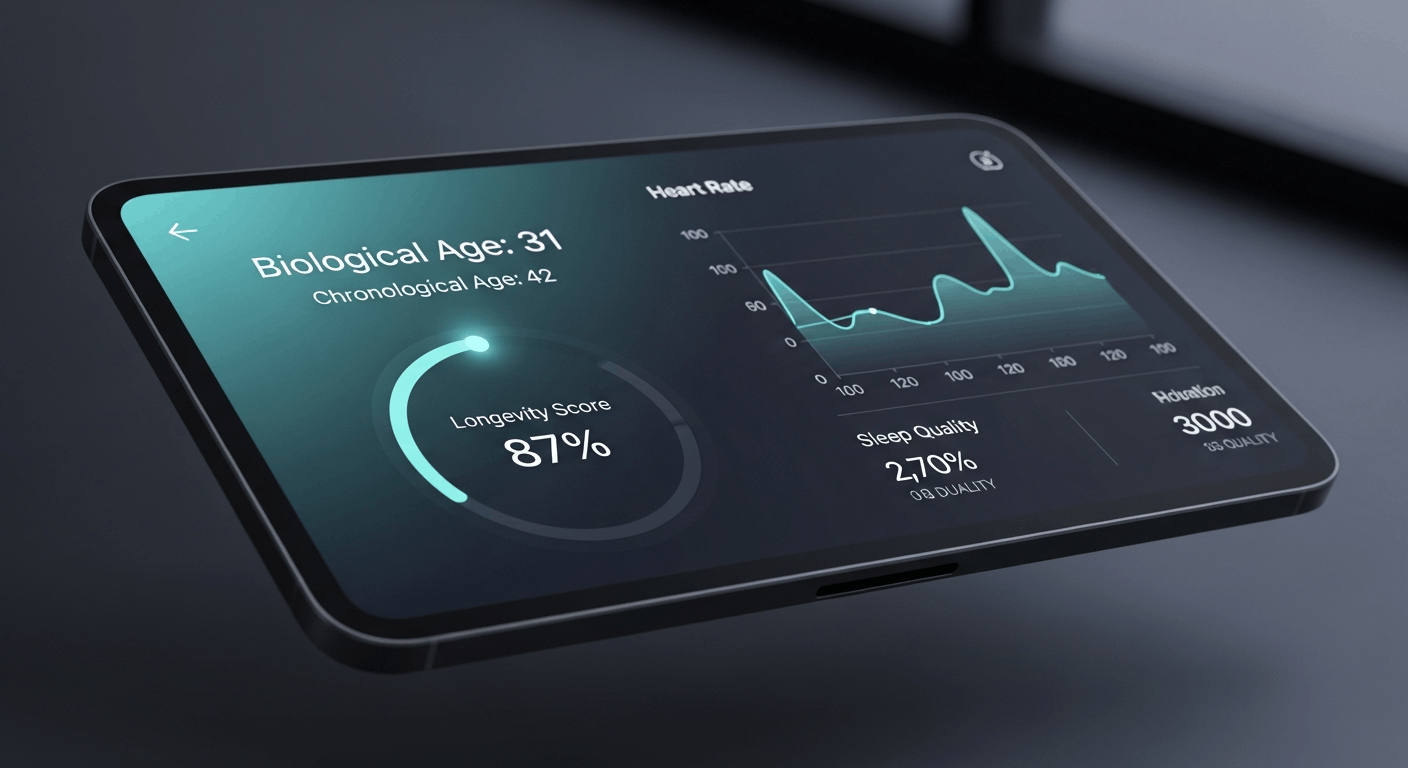
A record is read as a series: the direction of a figure over time is what the next decision rests on. © Vardix Group — Lonevi
The error that is a factor of a thousand
Take the string 250.000. It can be two hundred and fifty thousand, or two hundred and fifty with no decimals. The string alone cannot settle it; the unit printed beside it can. Where the unit does not fix the order of magnitude, the reader refuses instead of choosing: the points already in the series stay, and nothing new is invented.
The check asks a structural question about the unit rather than looking it up in a hand-made list of spellings. A list is complete only as far as the attention of whoever wrote it, so an unfamiliar count over a volume is treated as unknown — and unknown as ambiguous.
A doctor’s conclusion is not written for them
The same rule covers the text of a report. When a form has no conclusion or no recommendations section, Lonevi marks that section as not stated in the form rather than assembling one from the body of the document. A conclusion attributed to a doctor who did not write it is wrong even when every sentence in it is true. And an absence recorded openly is itself a medical fact; a heading that quietly disappears cannot be told apart from one lost on the way.
Each document is also read twice — once into the text a person reads, and once into the values that build the chart — and the two readings are compared, so that a number the chart would plot but the text does not contain is caught. That bounds one kind of failure. It does not certify the result: two readings that agree on the same wrong number agree perfectly, and the product does not pretend otherwise.

Every point on a biomarker chart should trace back to a value actually printed on a form. © Vardix Group — Lonevi
Why this matters to a partner
Recommendation 11 is about regulated devices. The situation it describes, though — nobody standing between the software and the person reading the result — is the everyday situation of a personal health record. There, the product’s own discipline is the risk control. The laboratory study shows where that discipline is tested: not in the easy readings, but at the edge between “negative” and “cannot tell”.
For a distributor, that gives a concrete story to tell a clinic or a longevity service. Not a promise of perfect accuracy, which no one can honestly make, but the specific places where Lonevi declines to guess: values it could not read, units that do not fix the order of magnitude, and sections a doctor never wrote. Lonevi is offered to clinics as well as individuals, including through a REST API and embedded widgets, and organisations can ask about licences, seats or a pilot.
If you work with clinics, laboratories or preventive-health services and want to offer a record that shows its gaps instead of hiding them, apply to become a partner — or read more about the product first.