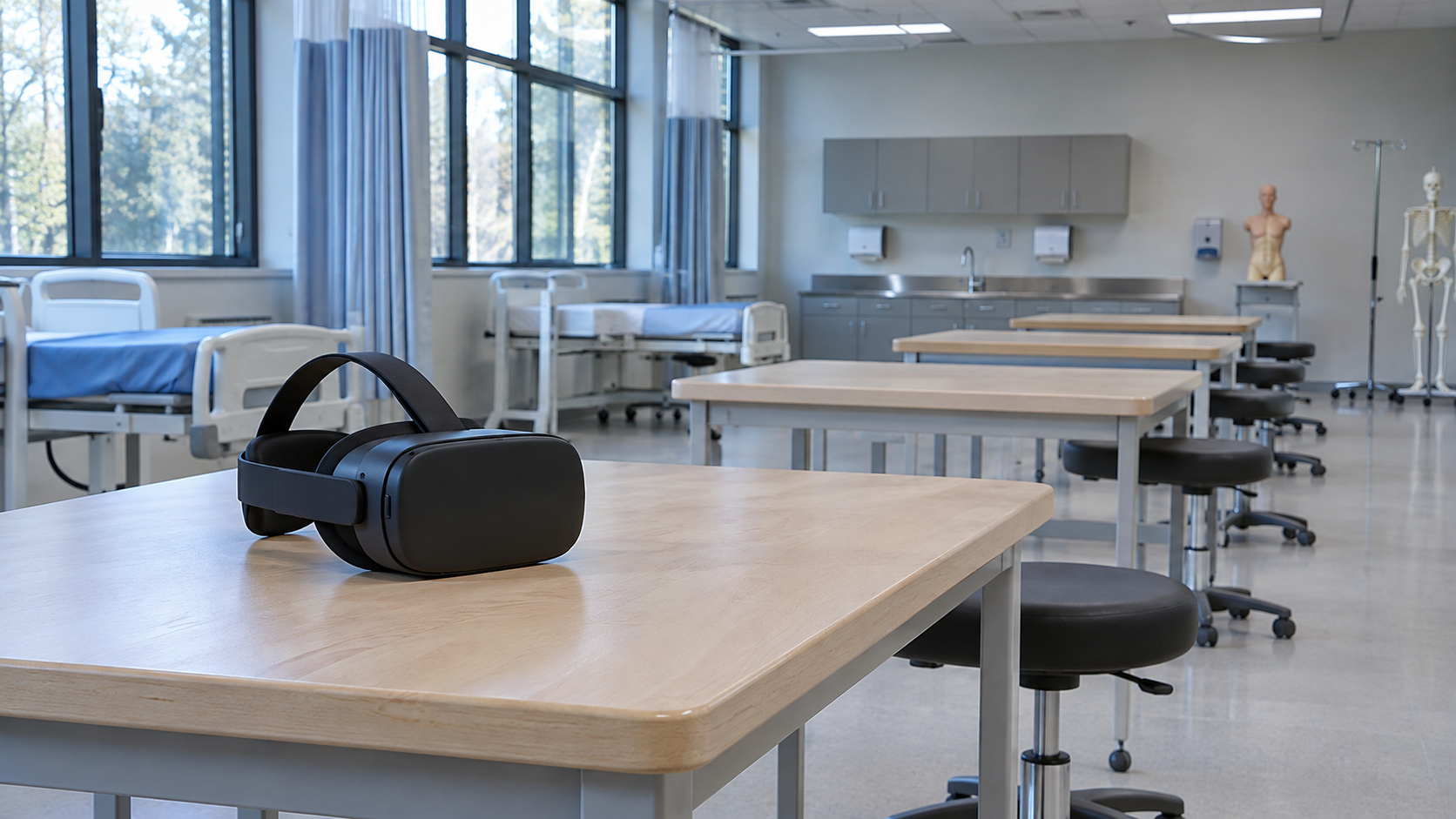
On Tuesday 24 November 2026 the School of Medicine of the National and Kapodistrian University of Athens opened a simulation centre in the AKISA building of Attikon General University Hospital. The university's own hub published the account on 26 November 2026 under the headline School of Medicine Opens Greece's First Fully Integrated University-Based Medical Simulation Centre, and described the School's new university-based training network as the first in Greece to integrate dry-lab training, virtual reality and wet-lab practice.
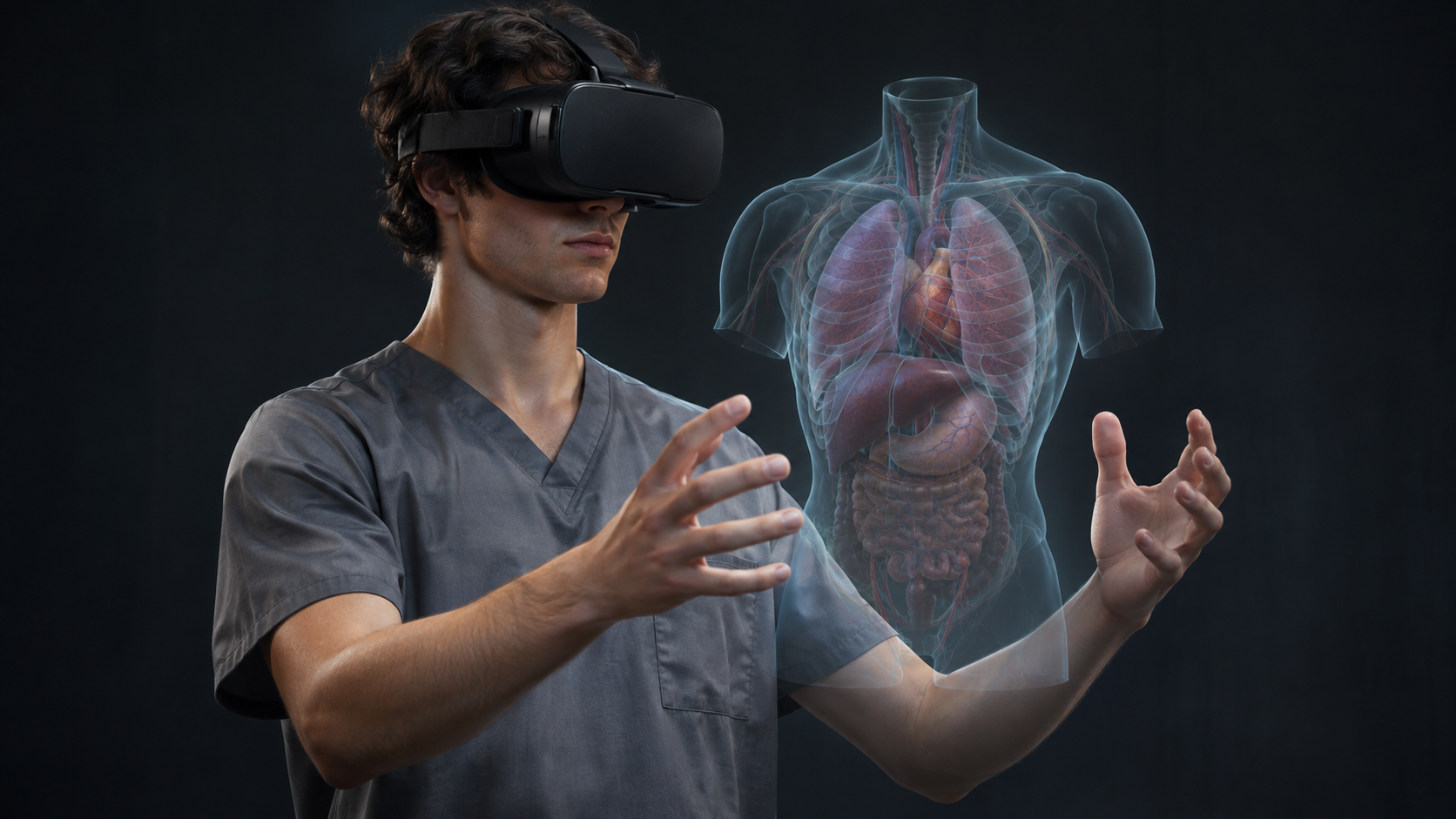
Guests at the opening toured the facilities and tried the virtual-reality headsets, the hub reported. A headset already in the room is not, by itself, a case a student can repeat before a first real procedure. The case a student can run again, and the instructor's view of the attempt, is what VARGATES Medical is for.
Dry lab, headsets, wet lab
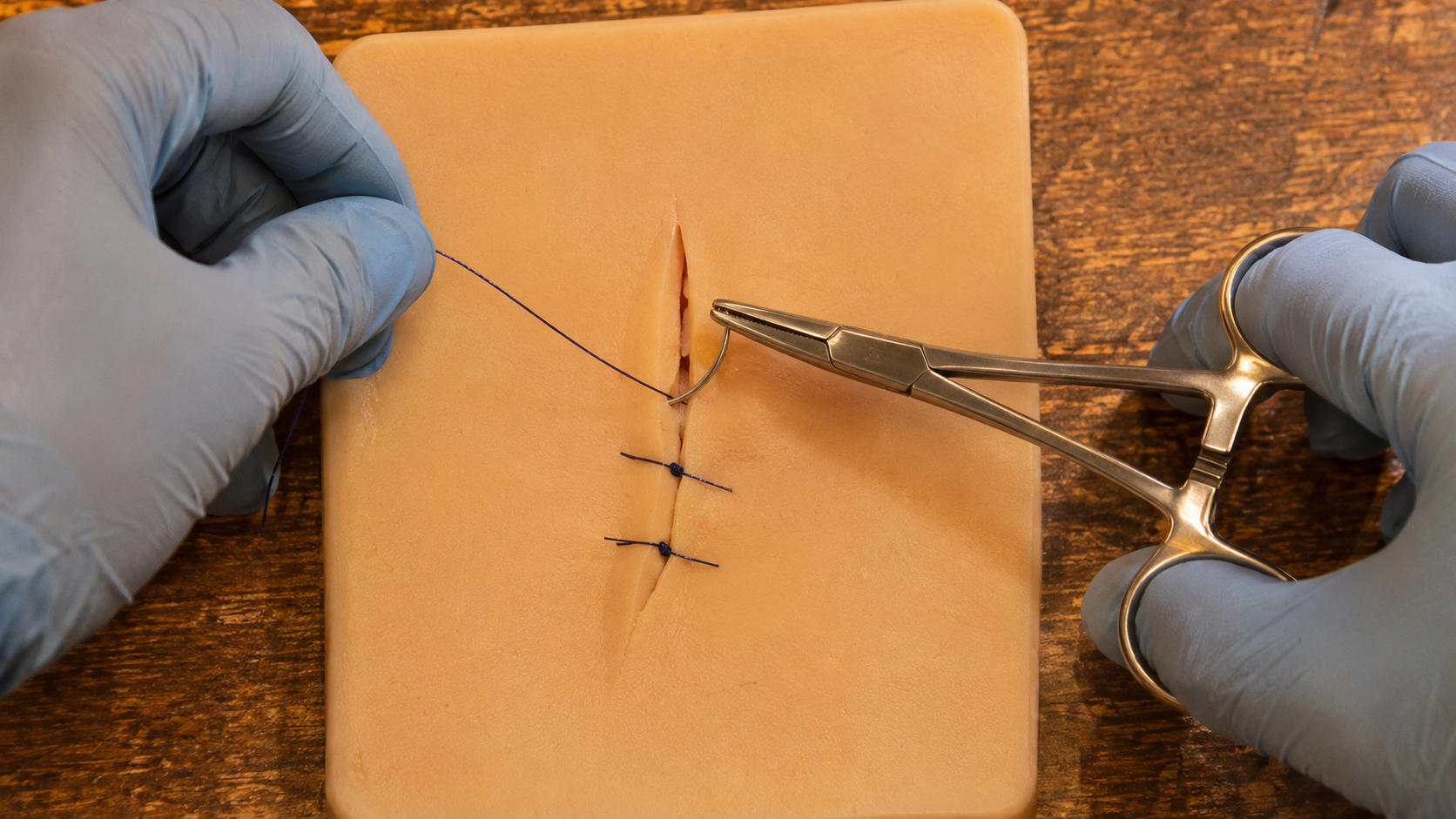
The hub splits the network into named rooms rather than one machine. The new Basic Simulation Centre, a dry lab, has 10 workstations and a camera-equipped demonstration station for suturing, venepuncture, urinary catheterisation, nasogastric tube insertion, airway management, cricothyrotomy and chest drain insertion. A separate virtual-reality area in the same AKISA building lists simulators for laparoscopic, robotic and arthroscopic surgery, plus headsets. The wet lab there has eight training stations and a central instructor station for work on animal tissue. The wider network, in the same announcement, names three advanced stations for paediatric, obstetric and adult care, and procedural rooms at Aretaieio and Laiko hospitals for laparoscopy, robotic surgery, gastrointestinal endoscopy and vascular surgery.
© Vardix Group
The sale that remains after the ribbon
Assistant Professor Panagis Lykoudis, in a talk the hub titles Simulation in Contemporary Medical Education, stated the principle the hub calls the heart of simulation-based training: never practise a procedure for the first time on a patient. Rector Gerasimos Siasos called the centre an investment in the quality of medical education and, ultimately, in patient safety. Neither remark names a software catalogue. A partner calling on a faculty that has just opened rooms like these is not selling the idea of simulation. The useful question is which rehearsal runs on the headsets the guests tried, and whether an instructor can see the attempt.
The public page for VARGATES Medical states that trainees practice in a risk-free environment before touching a real patient, and that students interact with virtual patients, instruments and anatomy in real time. It also says to track every session, score and error, and that instructors get real-time dashboards on student progress. That page is what a distributor can send. The Athens announcement does not say the university uses this product, and this note does not say so either.