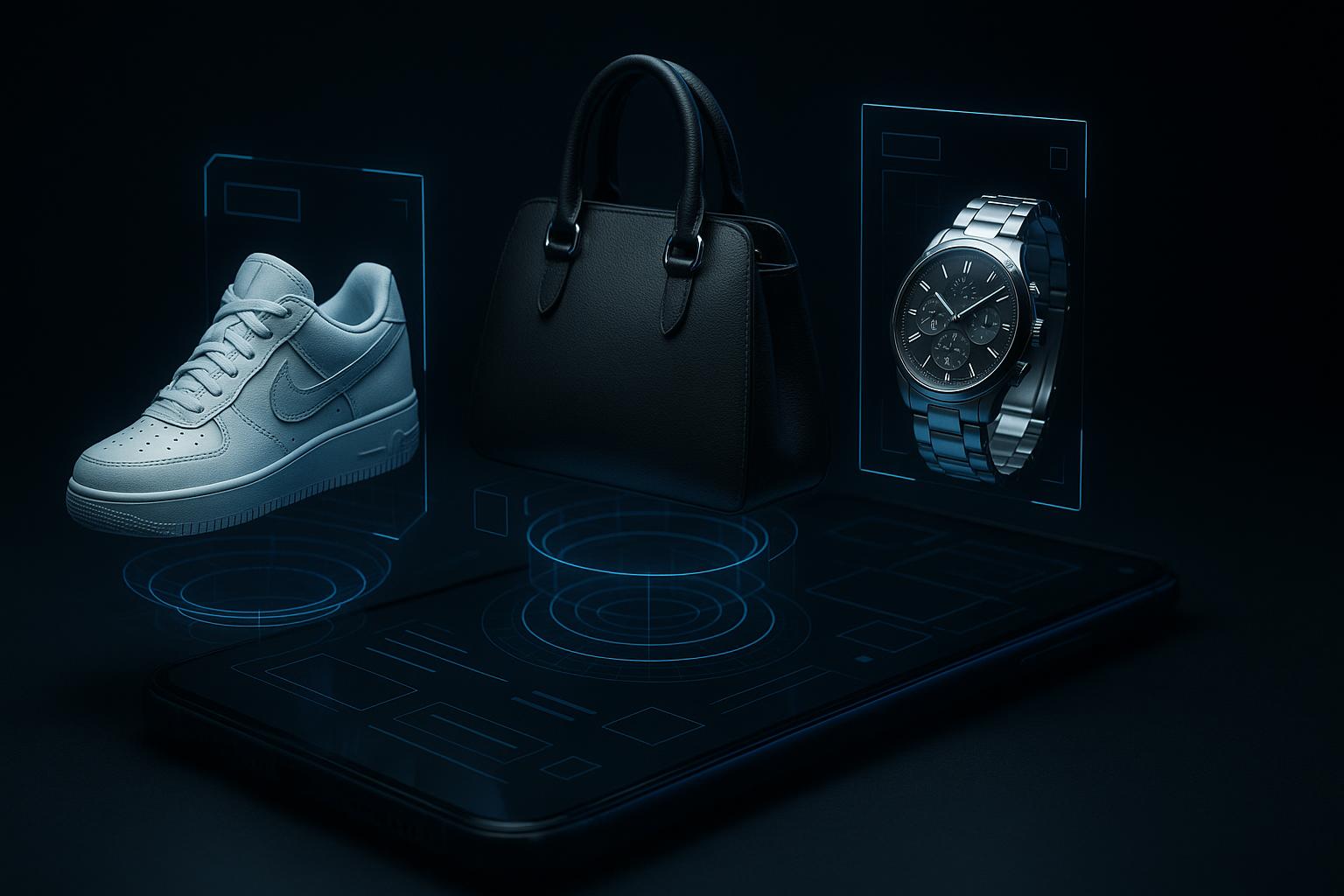
Online retail has a confidence problem. Nearly 79% of shoppers abandon their carts before completing a purchase. The top reason? They are not sure enough about what they are buying. A flat photo on a white background does not tell you how a sofa will look in your living room, whether a jacket will fit, or how a piece of industrial equipment will integrate into your workflow.
3D visualization and augmented reality directly fix this problem — and the numbers are now large enough to demand attention from anyone running an online business.
What the Data Says
Shopify analyzed millions of product listings and found that items with 3D or AR content generate 94% higher conversion rates than those showing only standard photos. That is not a marginal improvement. That is the difference between a struggling product page and a top performer.
Returns tell a similar story. E-commerce returns cost the industry hundreds of billions of dollars annually. Shopify's data shows 3D product media reduces returns by 40% on average — because customers know exactly what they are getting before the package arrives. Macy's ran a pilot using VR for furniture visualization and recorded 25% fewer returns in those stores.
The confidence effect also lifts basket size. Stores using 3D configurators see a 25% higher average order value — customers who can build and visualize their exact configuration spend more. Over 200 brand implementations show an average 65% conversion rate increase from product configurators alone.
And 80% of buyers report feeling more confident in a purchase decision after interacting with a 3D or AR version of a product.
Where It Is Already Working
Furniture and home decor was the first industry to mainstream AR visualization — IKEA, Wayfair, and dozens of regional players now let customers place virtual furniture in their actual rooms via smartphone camera. The result: fewer returns, higher satisfaction, bigger baskets.
Fashion and apparel is catching up fast. Virtual try-on for clothing, shoes, and eyewear is moving from novelty to standard feature. Shoppers who use virtual try-on tools are 30% less likely to return their purchase.
Industrial equipment and B2B is the frontier. Complex machinery, tools, and components are notoriously hard to buy online — product pages fail to convey scale, assembly, or real-world fit. 3D product tours, interactive exploded views, and AR placement tools are collapsing the gap between a spec sheet and an informed purchase decision.
Consumer electronics brands use 3D configurators to let buyers choose colors, storage, and accessories while seeing the exact product they are ordering — eliminating ambiguity that leads to post-purchase regret.
The Technology Shift That Made This Affordable
Until recently, producing 3D assets was expensive and slow — a realistic model could cost thousands of dollars and weeks of production time. Three shifts changed the economics:
Real-time 3D engines like those powering the VARGATES platform brought photorealistic rendering to web and mobile without requiring specialized hardware.
WebXR means augmented reality works directly in a browser on any modern smartphone — no app download required. The friction barrier is effectively gone.
AI-assisted modeling has cut asset production times by over 50%. A product that once took weeks to model now takes days. At scale, this transforms the ROI calculation for any retailer.
What This Means for Businesses in 2026
By the end of this year, analysts expect 80% of major retailers to have AR as part of their customer experience strategy. That shift is already underway in Western markets and is accelerating in Central Asia and Eastern Europe, where mobile-first shoppers are adopting immersive shopping experiences rapidly.
The competitive window for early movers is still open — but narrowing. Brands that implement 3D visualization now are differentiating against competitors still relying on flat photography. Brands that wait until it is universal will be paying table stakes, not gaining advantage.
For businesses evaluating the investment, the math is straightforward. If your average order value is $200 and conversion improves by 65%, or if your return rate drops 40%, 3D visualization typically pays for itself within one to three months at meaningful traffic volumes.
The VARDIX Perspective
At VARDIX, we have been building immersive 3D experiences for enterprise clients across education, industry, and now commercial applications. The tools that power medical simulation training and industrial workforce development are the same tools redefining how products are sold online.
We believe the next generation of e-commerce experiences will be built on real-time 3D — not as a premium feature, but as the expected standard. If you are exploring how immersive technology fits your business, we are ready to talk.